When it comes to cutting plywood and sheet goods, woodworkers face a fundamental choice: table saw or track saw? Both tools have loyal fans, and for good reason. Each excels in different situations. This comprehensive guide breaks down their strengths, weaknesses, and real-world use cases so you can decide which tool best fits your workshop, budget, and workflow.
Understanding Each Tool
The Table Saw
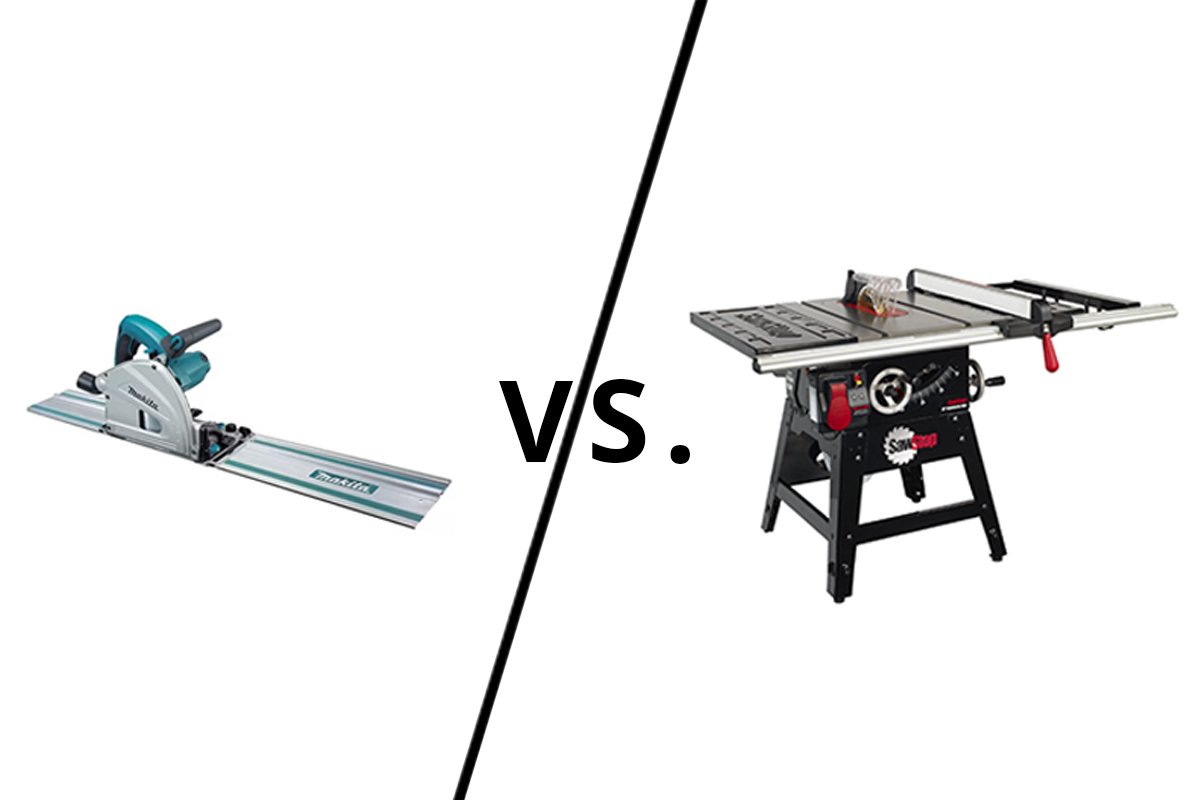
The table saw has been the backbone of woodworking shops for generations. It features a circular blade mounted in a flat table with an adjustable fence for precise, repeatable cuts. Table saws are incredibly versatile, capable of performing rips, crosscuts, dados, and miters with the right setup and accessories.
However, they require space, both for the saw itself and for infeed/outfeed support when cutting large sheets. A well-tuned fence and flat table make it unbeatable for speed and accuracy in repeat cuts, but setup and calibration can be tricky for beginners.
The Track Saw
The track saw (or plunge saw) is a newer addition to many shops but has quickly earned a devoted following. It combines the portability of a circular saw with the precision of a table saw. A motorized plunge saw rides along an aluminum guide rail, the “track” ensuring perfectly straight, splinter-free cuts that are ideal for breaking down large plywood sheets or trimming panels to size.
For woodworkers in small shops or garages, the track saw is a game-changer. It takes up almost no room, hangs easily on the wall, and turns any workbench or floor into a cutting station.
Advantages of a Track Saw
1. Portability and Small-Footprint Design
Track saws are compact and easy to store, perfect for tight garages or mobile contractors. You can even hang the track on the wall when not in use.
2. Safer Operation
Because the blade is fully enclosed and the saw rides on a guided track, the risk of kickback or accidental contact is minimal. Many users find track saws significantly less intimidating than table saws.
3. Cleaner Cuts with Less Tear-Out
The track’s rubber edge acts as a splinter guard, giving factory-smooth edges on plywood and melamine, especially when paired with a fine-tooth blade.
4. Excellent Dust Collection
Most track saws feature enclosed guards and vacuum ports that capture the majority of sawdust, keeping your workspace cleaner and healthier.
5. Precision Without Setup Hassle
You lay the track on your cut line and go. No need to measure offset from a fence or worry about blade drift, the saw follows the track with near-perfect accuracy.
Limitations of a Track Saw
Despite its versatility, a track saw isn’t a complete table saw replacement.
-
Limited Cutting Depth: Most track saws max out around 2–2.5 inches, making them less ideal for thick hardwoods.
-
Straight Cuts Only: Bevels and angles are possible, but intricate joinery or dados are better handled on a table saw.
-
Needs Accessories for Repeatability: To perform multiple identical cuts efficiently, you’ll need jigs, parallel guides, or an MFT-style workstation, which can increase cost.
Still, for sheet goods, cabinetry, and general project work, it’s an incredibly capable and space-efficient option.
Advantages of a Table Saw
1. Power and Versatility
A well-tuned table saw can handle nearly every type of woodworking cut rip, crosscut, miter, dado, and rabbet all with consistent precision.
2. Repeatability and Speed
Once your fence and stops are dialed in, cutting multiple identical pieces is fast and dead-accurate, a major advantage for furniture builders and production work.
3. Handles Thick Stock Easily
Table saws excel at ripping thick hardwoods or large structural material that would strain a track saw.
4. Expandability
Add jigs, sleds, dado blades, and crosscut fences, and your table saw becomes a full-on production center.
Limitations of a Table Saw
-
Space Requirements: Even portable contractor saws need plenty of infeed and outfeed room for sheet goods.
-
Safety Risks: Kickback is a common hazard if cuts aren’t properly supported or aligned.
-
Dust and Noise: Table saws are loud and messy, often lacking built-in dust collection.
-
Portability: Once installed, they’re heavy and not easily moved between jobs.
Personal Perspective: Lessons from a Small Shop
When I first set up my garage workshop, I had just enough space to fit a table saw and I was thrilled. I knew I’d be building plenty of built-ins and closets for my home, so investing in a table saw felt like the right move. It became the centerpiece of my small shop, handling everything from cabinet panels to face frames with solid accuracy.
But later on, I discovered track saws and that discovery completely changed how I worked.
Here’s why: as I transitioned from built-ins and cabinetry to furniture building, the limitations of my table saw started to show. One thing a table saw can’t do easily is finishing work on large, assembled pieces. For example, when I built a massive dining table, I needed to square off the ends perfectly. There was no way to fit that heavy, oversized top across my table saw without risking damage or inaccuracy.
That’s when the track saw became a game-changer. I could bring the tool to the work, not the other way around. With the track saw and a TSO Square Guide (an absolute must-have accessory), I could make long, perfectly square crosscuts right where the piece sat. The precision was incredible — clean, accurate, and repeatable.
Looking back, I wish I’d discovered the track saw much earlier. It completely transformed how I work in a small space, allowing me to take on bigger furniture projects without wrestling large panels across a stationary saw. The track saw didn’t replace my table saw, it expanded what my workshop could do.
Now, my workflow feels balanced: the table saw handles production cuts and joinery, while the track saw delivers flawless finishing and large-scale precision that a stationary tool simply can’t match.
Choosing the Right Tool for You
If you’re still weighing which saw fits your workflow, I’ve put together a complete guide called Choosing the Right Cutting Method for Plywood.
It breaks down each method, from circular saws to full cabinet-grade setups, with step-by-step instructions, pros and cons, and blade recommendations to help you match your tool choice to your space, skill level, and project goals.
1. Project Type
If you primarily work with plywood, MDF, or melamine, a track saw will make your life easier.
If you cut a variety of materials, angles, and joinery, the table saw remains king for flexibility and repeatability.
2. Space and Mobility
Small shop or shared garage? Go track saw.
Dedicated workshop with room for infeed/outfeed tables? The table saw belongs there.
3. Safety and Skill Level
Beginners often feel more confident starting with a track saw thanks to its intuitive design and lower risk.
Experienced woodworkers can safely unlock the table saw’s full potential with proper technique and training.
4. Budget and Long-Term Goals
A quality track saw setup (saw, track, and clamps) typically costs less than a cabinet saw, but if you plan to build furniture or custom cabinetry long-term, a solid table saw is a wise investment.
Final Verdict
If your workshop is tight on space or you mainly cut sheet goods, a track saw is a powerful and flexible tool that delivers precision without requiring a full shop setup. It’s portable, safe, and incredibly capable for cabinetry, finishing work, and furniture building.
However, if your projects involve repeated cuts, joinery, or thicker hardwood stock, the table saw remains essential. It’s unmatched for speed, repeatability, and production efficiency once it’s dialed in and properly supported.
In truth, the best workshops don’t choose one over the other, they use both. The table saw handles the heavy lifting and repeat cuts, while the track saw shines for finishing work, squaring large pieces, and cutting full sheets where accuracy and mobility matter most.
After all, the smartest upgrade isn’t just a new tool, it’s knowing which tool to use at the right time.
If you’d like a deeper dive into how each cutting method compares, including step-by-step instructions, setup times, pros and cons, and recommended blades, check out my guide: Choosing the Right Cutting Method for Plywood.
It’s designed to help woodworkers and cabinetmakers find the perfect balance of accuracy, portability, cost, and safety for their workflow, whether you’re running a full shop or cutting panels in a home garage.